

AI Studio
Case Study
Objective
Our team set out to create a studio of AI-powered tools, a flexible, all-in-one 'playground' where prompt engineers can easily build and test prompt chains.
Timeline
4 Months
Programs
Figma, Figjam, Adobe Suite
Role
Product Designer, UX Researcher
Disclaimer
Content modified due to privacy policies
Due to an NDA, this case study have been scrubbed of text. Remaining text/images have been censored or altered.
Building the Perfect Environment for Prompt Engineers
1
The Goal
To create a version control system that encourages continuous editing and building. Achieved by enabling users to compare different chains, track their progression, and effortlessly swap or modify versions as needed.
User & Business Impact
Retrospective

The Logic Builder allowed engineers to quickly design complex prompt chain structures in one localized environment.

The Prompt Bay organized chains built in the Logic Builder into a grid. The tool allowed engineers to visualize structures from an overarching birds eye view.
Taming the AI Jungle: A Tree-Based System for Chains
2
The Goal
To redesign the chain structure into an easily scannable format. We aim to use this new structure primarily as the main navigational tool within the program.
User & Business Impact
Retrospective

A key innovation in the AI space was our prompt tree. A completely reimagined way to navigate. It simplified chains into a one-stop control panel for engineers.

The tree permitted engineers to navigate and also supported multiple customizations based on individual preferences, role, and purpose.
Designing a Version Control That Doesn't Suck
3
The Goal
To redesign the chain structure into an easily scannable format. We aim to use this new structure primarily as the main navigational tool within the program.
User & Business Impact
Retrospective

The ideal version control balanced functionality with efficiency. Our intention was to create an environment that felt as free flowing and lightweight as possible.

The greatest aspect of the new version control was a users ability to compare. All previous instances & relatives of a prompt visible to an engineer at once.
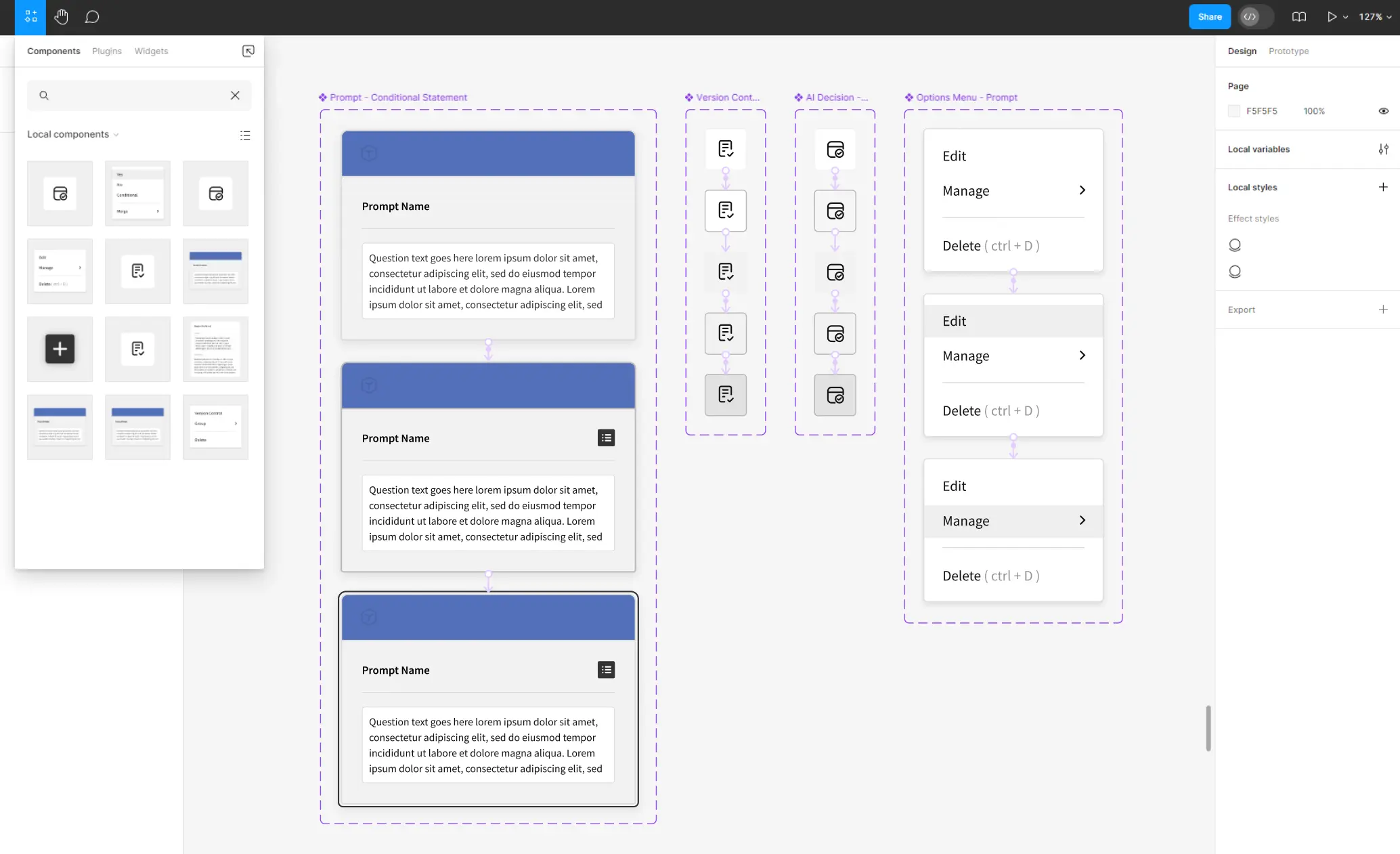
Figma Design System
Developing a design system of components in Figma was the main contributor to the speed of the AI studio. Standardizing the elements into reusable components, allowed us to create Figma prototypes extremely quickly for immediate testing with engineers.
Fin.
Interested in seeing the full project?
Feel free to request a live demo via my email or LinkedIn:
shekjeremy5@gmail.com